
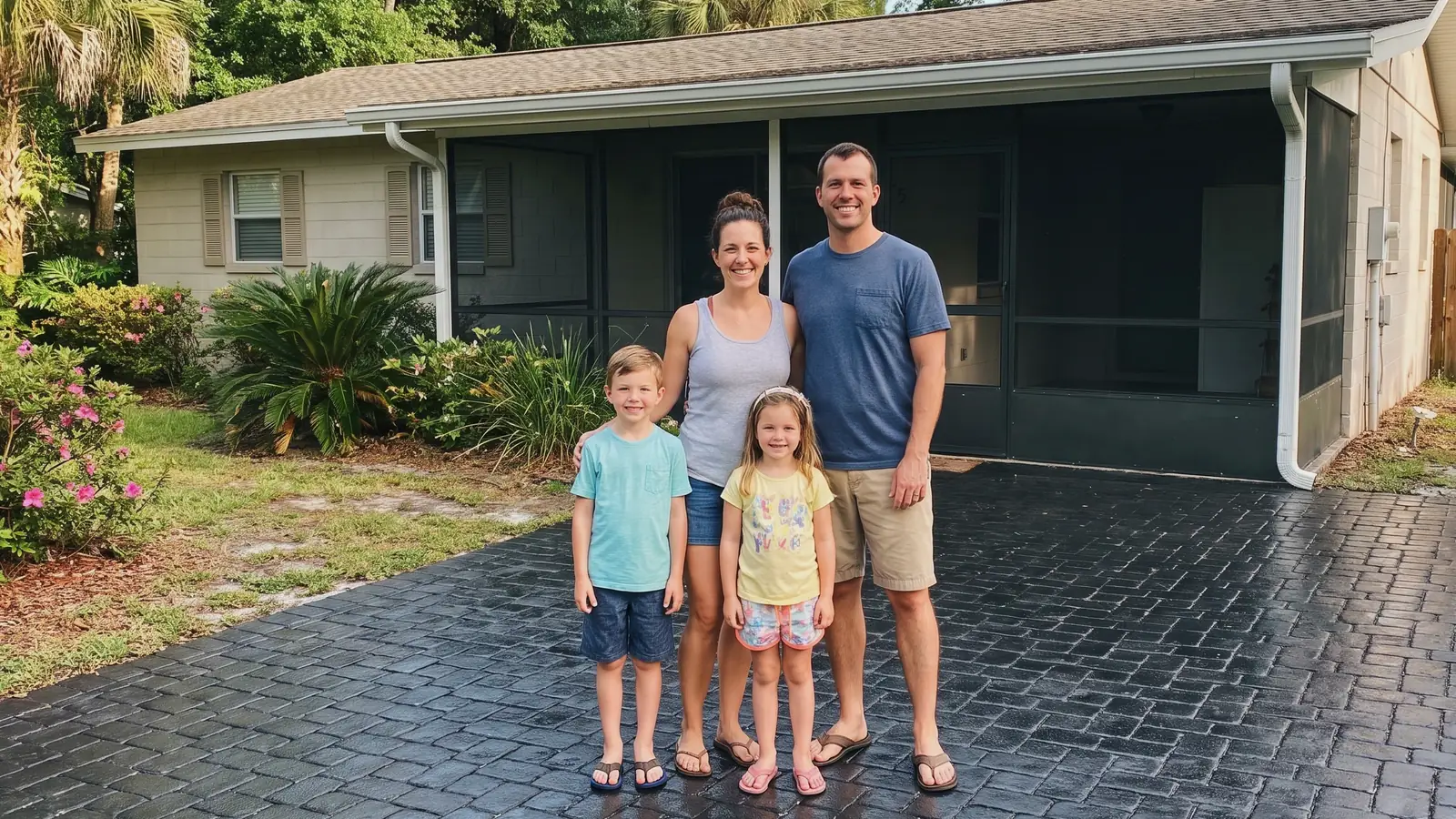
Paver sealing for Disston Heights homes
Paver Sealing in Disston Heights, FL
Disston Heights driveways built in the 1950s and 1960s can look new again, so call (727) 619-2341 for a free estimate.
- Brings out deeper paver color
- Fresh joint sand helps lock pavers in place
- Gives weeds less room to grow
- Makes the surface easier to keep clean
- Free estimate, no obligation
Request a Free Estimate
Free, no obligation.
Fast, careful paver sealing in Disston Heights
Paver sealing is available across Disston Heights, from the older blocks near Gladden Park to the newer builds mixed in among them. A local contractor can wash, re-sand and seal your driveway, front walk or back patio, and a visit to look at the job costs nothing. Ask, and you will hear back within 1 business day, usually much sooner, so request a free estimate when you are ready.
Picture the 1950s driveway you walk past every day, gray in the middle and pale along the edges. A wash, new sand and a fresh coat bring the original color back in a single visit. If you want to talk through your own pavers first, call (727) 619-2341.
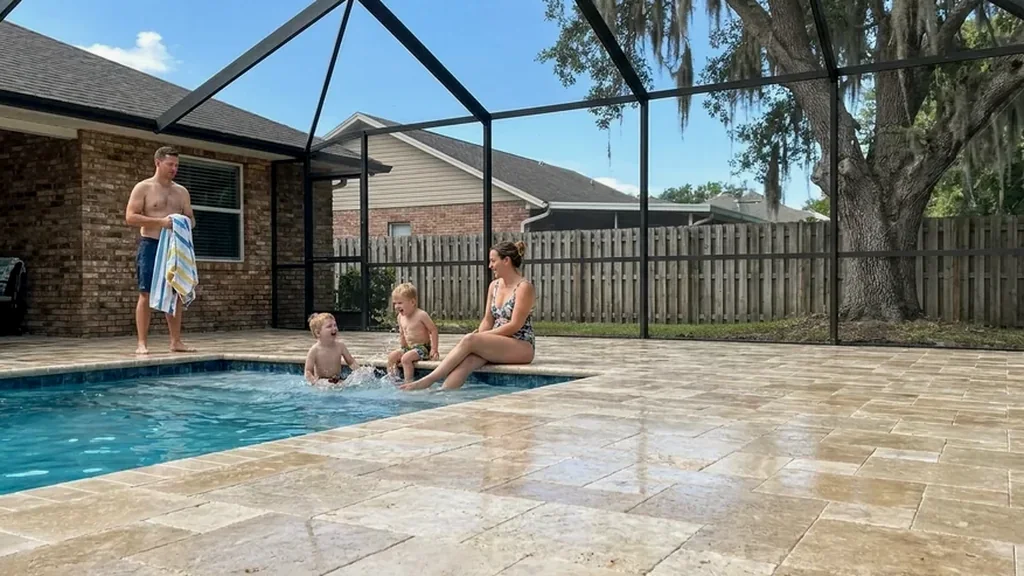
Why hire a local paver sealing contractor in Disston Heights?
Disston Heights is mostly mid-century homes, and a lot of the pavers around them went in long after the houses did. A local paver contractor knows how to read that mix, so request a free estimate and describe your street.
Look first, price second
The contractor walks your Disston Heights lot before naming a number. If the number does not suit you, you walk away and owe nothing.
A range worth knowing
The published figure in this region is $1.00 to $1.75 a square foot for the whole clean, sand and seal. Hold every bid against it.
Pick a sheen
Matte stays calm beside a 1960s ranch front. Wet look deepens the color, though scuffs appear sooner on a busy drive.
Your call, always
You choose the date and the finish. Nothing is booked until you say so, and saying no is fine.
Get Your Free Estimate in Disston Heights
Tell us about your pavers in Disston Heights.
Free, no obligation
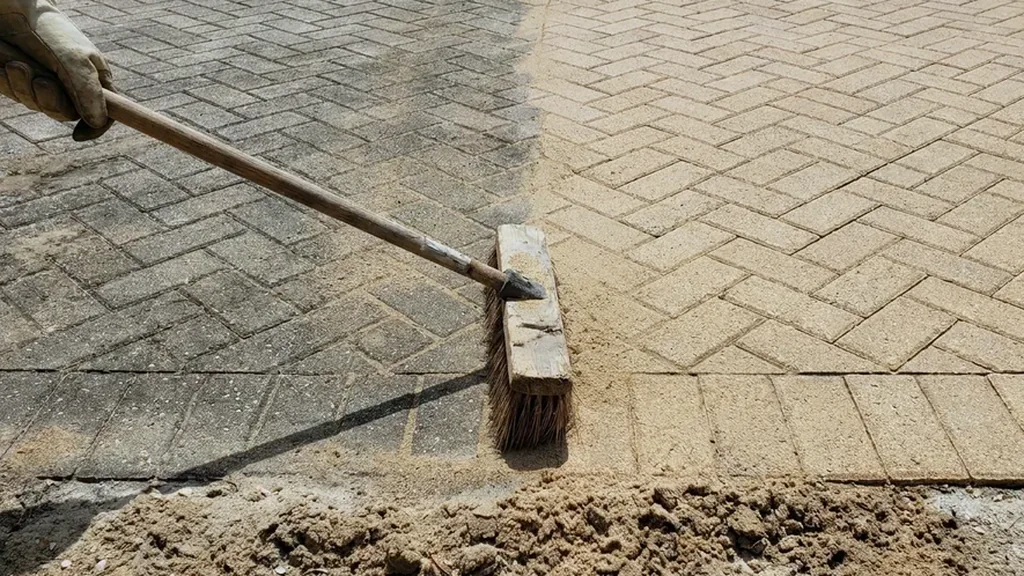
What paver problems show up most in Disston Heights?
Pavers added to a 1950s house
A neighborhood profile says 92.2 percent of Disston Heights homes were built from 1940 to 1969. Many of the pavers around them were laid by later owners, with no paper trail. Whoever laid or coated them before you could have used any product on the shelf. Water-based sealer cannot go over solvent-based sealer, and that is why the old coat gets named before any new product is chosen. Ask neighbors who paved before you, since someone on the block may know the product.
Oak leaves on the driveway
A Tampa Bay paver company says live oak leaves and acorns leave tannin stains on pavers that are unsealed or thinly sealed. Mature trees are common on older Pinellas streets. If your driveway sits under a canopy, expect brown blotches near the edges. Those marks need to come out before sealing, which means the wash is the first real step. A quick look at the trees over your drive tells you how much cleanup to expect.
Joint sand that rain keeps taking
St. Petersburg gets about 52 inches of rain a year, with a rainy season from June through September. The same Tampa Bay company says near-daily summer storms keep pavers wet and wear away joint sand. Gaps in the joints give weeds a foothold and let pavers wander, and the drive starts to feel loose when you walk it. Washing pulls out more sand, so the contractor puts it back before any sealer goes down. After a hard June rain, a drive with open joints shows sand washed to the low edge.
A sprinkler that hits one strip
The Tampa Bay company lists irrigation heads that spray the same strip of paving every morning as a source of wear long before the rest of the surface needs work. On a small Disston Heights lot, one misaimed head can cover the whole walkway. Look for a darker band or a crust of mineral spots. Mention it at the estimate so the contractor can check that strip first. Fixing the spray angle afterward is the cheapest way to protect a fresh coat. Moving one spray head costs little and saves a new coat from early spots.
Open sun on a wide driveway
July highs in St. Petersburg average about 91 degrees. A driveway with no shade takes that heat and sunlight all day, and color fades first where the sun lands longest. Sealer slows the fade but wears like any coat, and the color you see in year four is not the color you saw in year one. Between coats, companies commonly quote two to five years, and a drive that gets sun all day may sit at the short end of that span. If your driveway looks chalky or pale in the middle, that is a good sign the coat has thinned. A pale, chalky middle strip on a sunny drive is the usual sign that a coat is thin.
Does my Disston Heights subdivision change the paver plan?
Sometimes, because Disston Heights is built from many small subdivisions rather than one master plan. Gladden Park homes date from 1955 to 1964 and run from 864 to 2,069 square feet. Glenwood Park, Brentwood Heights, Golden Crest, Mount Washington and Pinebrook Manor sit nearby, so tell the contractor your subdivision when you request a free estimate.
Not every house here is old. Subdivisions such as Highview and Disston Ridge Estates appear in listings alongside new construction, so a 1957 home can sit next to a newer build. Newer pavers tend to hold their color longer, while a mid-century lot may carry a coat nobody remembers. Call (727) 619-2341 and say roughly when your pavers went in, even if you only know the decade.
A neighborhood profile calls nearly all of the housing here free-standing single-family homes, mostly small to medium in size. That means driveways and front walks do much of the work, and back patios are often modest. A contractor measures the real square footage, since that sets the total at the published rate. When you are ready for numbers, request a free estimate.
What does paver sealing cost in Disston Heights?
The published figure for this region is $1.00 to $1.75 per square foot, covering the wash, the sand and the sealer together. Your Disston Heights total is that rate times the paving you want done. Count the driveway, the front walk and the back patio before you ask. To turn that into a real number, request a free estimate.
Four things nudge a bid up or down: tannin and algae, lost joint sand, an unknown old coat and lifted pavers. Lifted ones are fixed first, since a coat over a dip just keeps the dip. Each is easy to spot once the contractor stands on your drive. Call (727) 619-2341 and you can run through them by phone.
| Paved area | Typical example | Clean, sand and seal |
|---|---|---|
| 300 sq ft | Small patio or walkway | $300 to $525 |
| 600 sq ft | Two car driveway | $600 to $1,050 |
| 1,000 sq ft | Large driveway or pool deck | $1,000 to $1,750 |
| 1,500 sq ft | Driveway plus pool deck | $1,500 to $2,625 |
Math based on the $1.00 to $1.75 per square foot that Tampa Bay paver companies publish. Your contractor sets the actual price after seeing the surface. Repairs, leveling and stripping failed sealer are usually extra.
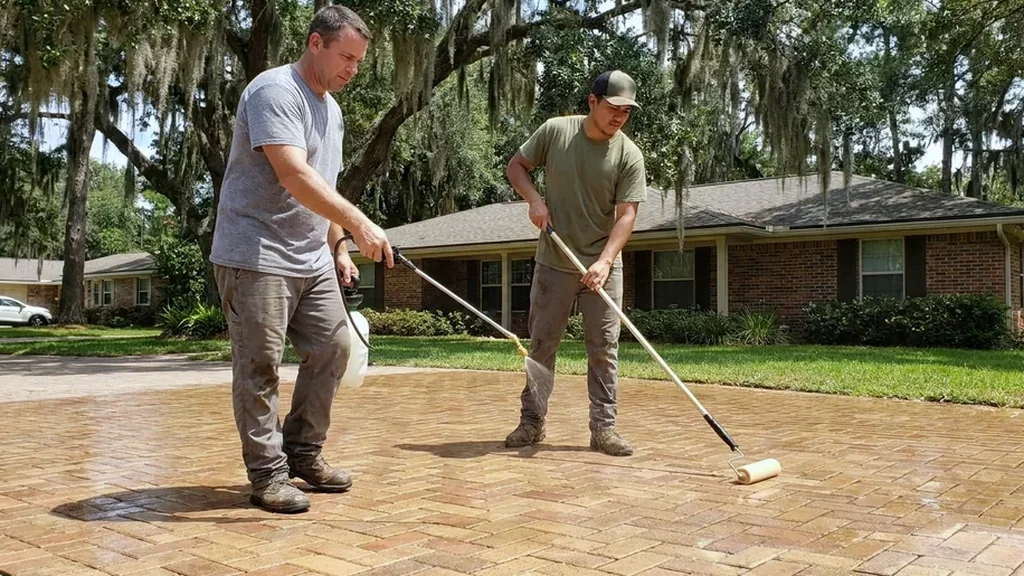
How does a paver sealing job work in Disston Heights?
Walk the drive together
The contractor starts on foot, and you can come along. Low spots, stains and any sealer left by an earlier owner get noted, and the old product gets a name before a new one is chosen. Lifted pavers are put right first. Then you hear the plan and the price in plain words. Questions are welcome at every point.
Wash it clean
Next the pavers are washed until the tannin, the green film and the tire marks are gone. Dirt left behind would simply end up under the coat. So the wash is not a step to rush. It also lifts out the old joint sand. Edges near the garage and the mailbox, where oil and leaf litter collect, get a second pass.
Sand the joints back in
Fresh sand goes into every joint and stops roughly 1/8 to 1/4 inch under the chamfer edge, according to a Pinellas company. That depth keeps pavers level and gives weeds less room. Extra grains are swept off the face before anything else happens. On a small lot this step goes quickly, and on a long drive it can fill an afternoon.
Wait for dry
Now comes the part nobody can rush. Rain falls hardest from June through September, and August brings more than nine inches. So the contractor picks a dry window and moves the date if a storm shows up. Shady strips beside the house tend to dry last. Ask for the backup date before you agree to a day.
Coat it
Last, the sealer goes down, matte or wet look. Scuffs show sooner on wet look, so think about tire traffic. Recoat gaps of two to five years are what companies quote. A Pinellas company lists about four hours for feet and 48 hours for cars on its pavers. Move cars to the street the night before so the surface is clear when work starts.
Complete paver services in Disston Heights
Think of a Disston Heights job as five jobs in a row: look, wash, sand, dry and coat. Each one sets up the next, and skipping one hurts the finish. The wash does most of the visible work, while the sand keeps everything steady. To hear how long each takes on a lot like yours, call (727) 619-2341.
Your drive gets tires and full sun, and the front walk gets feet all day. A back patio may get shade and a grill. Pool decks, where they exist, add splashing and chemicals on top. List what you have when you request a free estimate, and the plan can be built area by area.
Choosing a sealer is two small decisions. First comes water-based or solvent-based, which depends on what is already down, and second comes matte or wet look, which is taste. Many owners of 1960s ranch homes lean toward matte. Call (727) 619-2341 and talk it through with the contractor.
Pinellas County is wet from June through September, and August is the wettest month at 9.33 inches. Sealing in that stretch means more waiting for dry pavers. Some owners pick a drier month for that reason. To ask what dates are open, request a free estimate.
Questions to ask before you hire
- Can you tell whether an old coat of sealer is still on my pavers before you decide to strip it?
- What happens to the weeds and moss in the joints before the new sand goes in?
- Who do I call if the finish looks cloudy a week later?
- Will the written price show a cost per square foot for each area?
- Does the quote cover the orange rust stains from my sprinkler water?
- How do you keep the wash water out of the storm drain and off my neighbor's yard?
- How do you protect my screen cage and pool equipment during the wash?
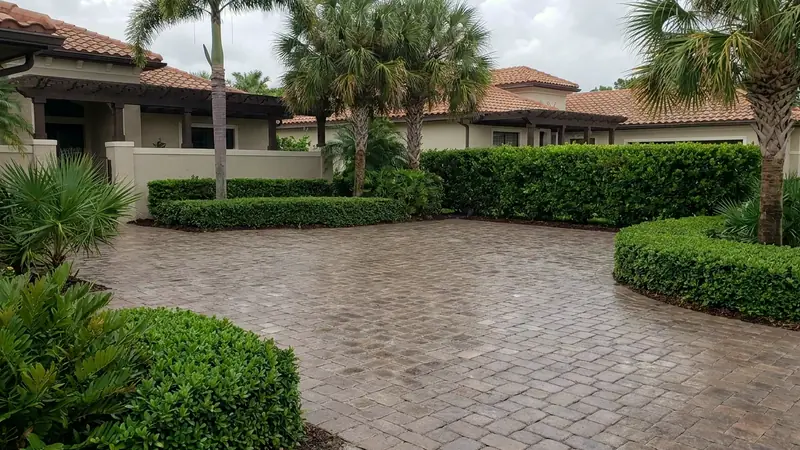
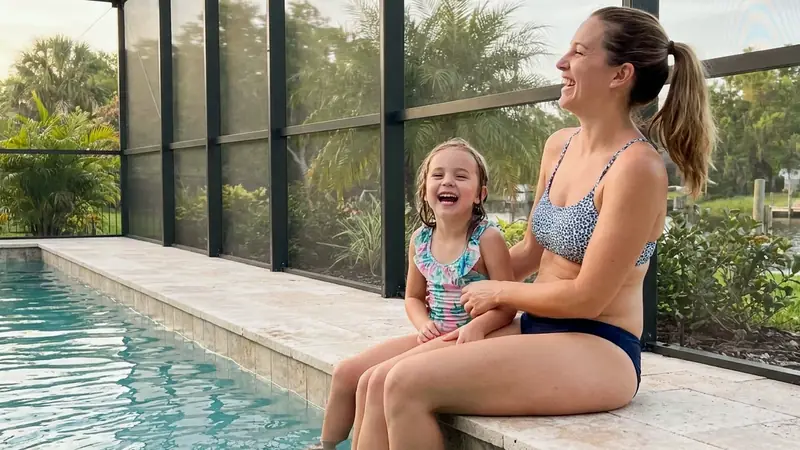
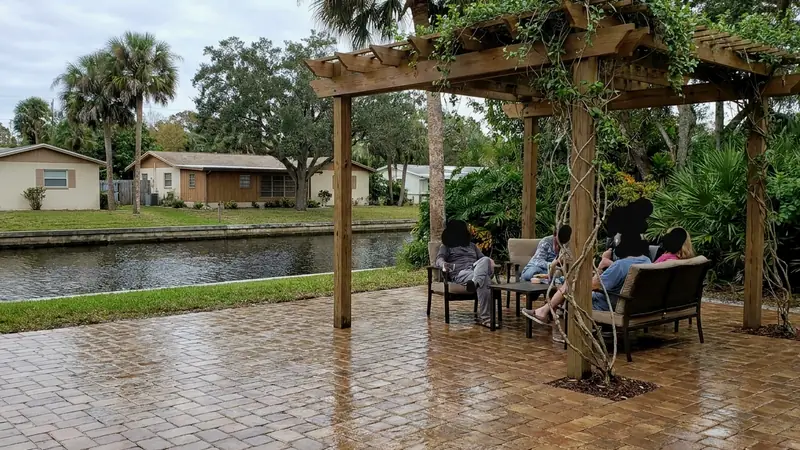
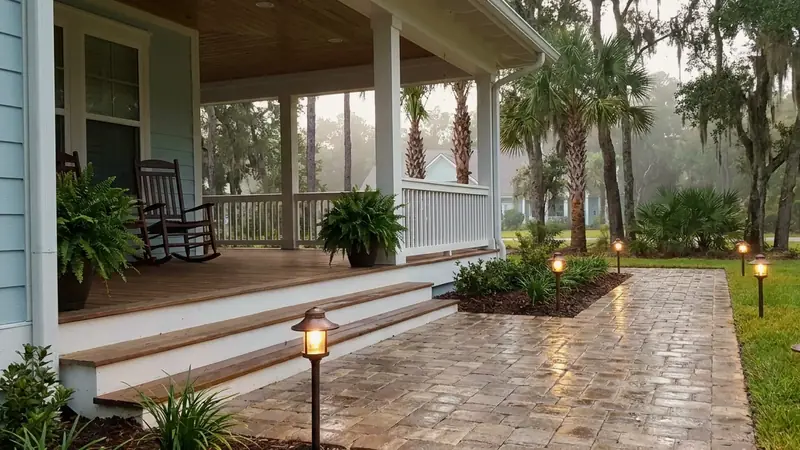
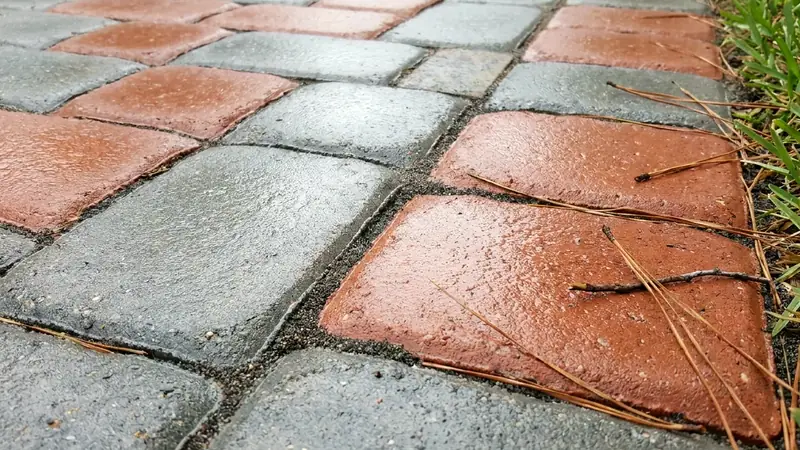
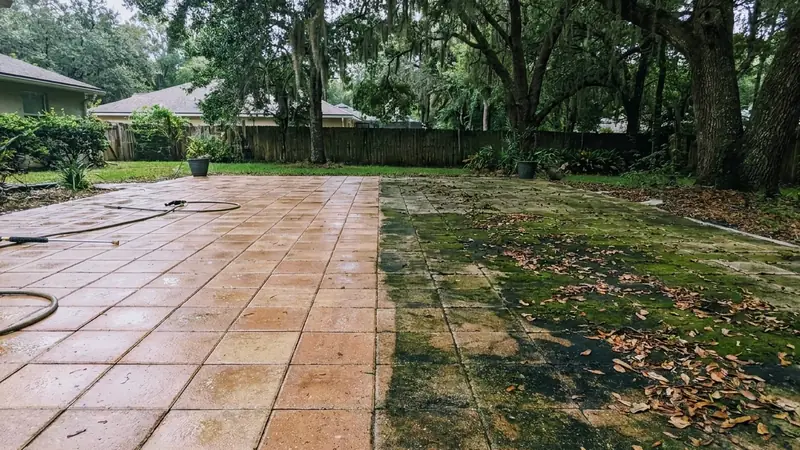
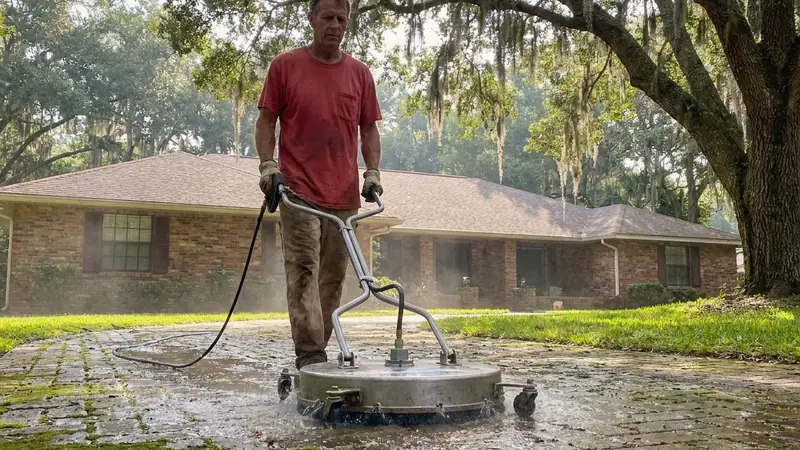
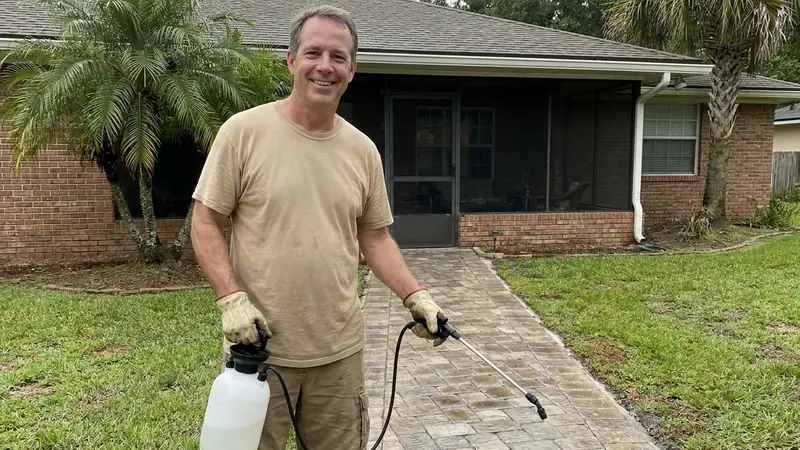
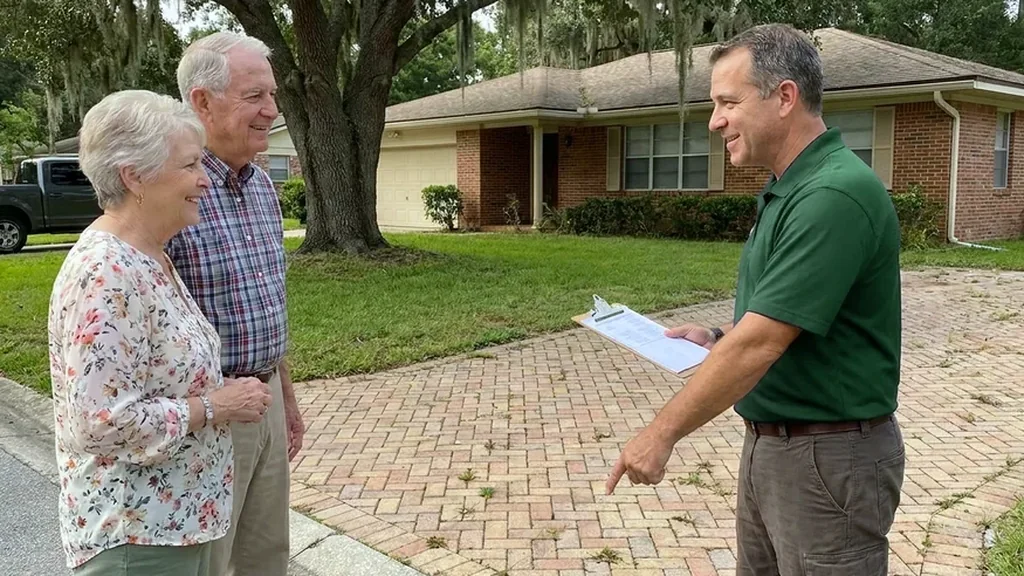
What do sealed pavers look like around Disston Heights?
Why local matters in Disston Heights
Most Disston Heights homes were built before 1970, and a lot of the paving around them has changed hands more than once. A contractor who works nearby expects odd old coats and uneven sand. That means fewer surprises on the day. To hear how that plays out on your street, call (727) 619-2341.
Local also means knowing the ground. Pinellas County is a peninsula with water on most sides, and the area is the most densely populated county in Florida. Lots are close together, so work areas can be tight. If your drive is narrow, request a free estimate and say so.
The neighborhood name goes back to Hamilton Disston, who bought 4 million acres of Florida in 1881. Streets here followed decades later, in many small subdivisions from Gladden Park to Golden Crest. A nearby contractor learns each one over time. Call (727) 619-2341, describe your block and decide later about booking.
Who was Disston Heights named for, and does it matter?
Disston Heights is named for Hamilton Disston, who founded Disston City, now Gulfport. He bought 4 million acres of Florida land in 1881, and his purchase helped build towns such as Gulfport and Tarpon Springs. It matters mostly as local color, but it ties your street to the early land boom. To learn what applies to your own lot, request a free estimate.
Today the neighborhood is a patchwork of small subdivisions from the 1950s and 1960s, with some new construction mixed in. Gladden Park, Glenwood Park and Golden Crest are among the names you will see on listings. Pinellas County is a peninsula, and more than half of its area is water, so the nearby bays shape the humid air. Call (727) 619-2341 and name your subdivision.
Frequently Asked Questions
How much does it cost to seal pavers in Disston Heights?
Published prices in this region run $1.00 to $1.75 per square foot for the clean, the sand and the seal. Multiply by the paving you have, then expect the real quote to move with tannin, lost sand and any old coat. Ask for the square footage in writing.
What is the average cost to seal pavers near Disston Heights?
Around here, companies publish $1.00 to $1.75 per square foot to clean, sand and seal. Other Florida markets can differ a lot. The only figure that counts for you is the one from a free visit to your own driveway.
How soon should Disston Heights pavers get a new coat?
Most companies quote a recoat every two to five years. A drive that sits in sun all day tends toward the short end. Water that sinks in and darkens a paver, rather than beading up, means the coat has worn thin.
What is the right sealer for pavers in Disston Heights?
That depends on the coat already there and the look you want. Since water-based sealer cannot go over solvent-based sealer, whatever is on the pavers now narrows the choice. Matte hides scuffs, and wet look shows more color.
Can I seal over my old Disston Heights sealer?
Sometimes, but the contractor has to learn what it is first. A solvent-based coat leaves no room for water-based sealer on top. On a lot from the 1950s or 1960s, an earlier owner could have used anything. Hold on to any receipt or product name that turns up.
Will sealing fix sunken pavers in Disston Heights?
No, because sealer locks a dip in place. Sunken or lifted pavers are reset before anything else. Show the contractor any low spots at the first visit, especially by downspouts and tree roots.
How long until I can use my driveway after sealing?
According to one Pinellas company, feet can go back on after about four hours and tires after 48. Both the product and the day's weather can change that. Ask for the timing in advance and plan to park on the street for a day or two.
Why does joint sand matter on a Disston Heights driveway?
Sand holds pavers in place and keeps them level, and a Pinellas company says it should sit about 1/8 to 1/4 inch below the chamfer edge. Washing removes some, so the joints are refilled before the sealer. Without it, pavers rock and weeds move in.
What happens at a free paver sealing estimate in Disston Heights?
The contractor looks at stains, low spots and lost sand, and measures what you want done. You get a price based on that. You decide whether to go ahead, and you can ask when work could start and what happens if it rains.
Does paver sealing stop weeds in Disston Heights?
Not alone. Fresh joint sand does most of the work, and a coat helps hold it in place so seeds have less room to take root. A Tampa Bay company notes that open joints invite weeds and ants, so the sand step is part of every job.
Does the age of my Disston Heights house change the sealing plan?
Often, yes. A neighborhood profile says 92.2 percent of homes here were built from 1940 to 1969, so many pavers were added later by owners who left no record. The contractor checks for settling, past repairs and old sealer before quoting. Tell them roughly when the house and the pavers went in.
Which Disston Heights subdivisions can get paver sealing?
All of them. Gladden Park, Glenwood Park, Brentwood Heights, Golden Crest, Mount Washington, Pinebrook Manor and Plaza Terrace are among the named subdivisions here, and the contractor covers the area as a whole. Name yours when you ask so the visit can account for the age of the homes.
Nearby areas we serve
Ready for a Free Estimate in Disston Heights?
Call (727) 619-2341 and tell us about your pavers.
Free, no obligation